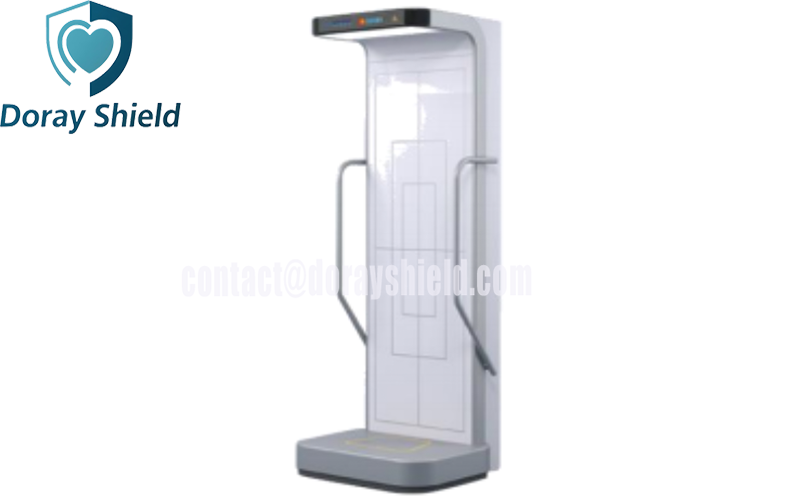
For the detection and evaluation of residual, recurrent, and metastatic lesions after surgery in differentiated thyroid cancer, the main clinical technique used is imaging based on the radionuclide iodine-131 (¹³¹I). This technique utilizes the iodine-taking characteristic of differentiated thyroid cancer cells, and a whole-body scan is performed after oral administration of radioactive iodine to achieve lesion localization and functional assessment. The I-131 Treatment Dynamic Radiation Detection Instrument provides a convenient and rapid image of the distribution of I-131 in the body by imaging the whole body of patients after I-131 treatment. This allows for a more accurate determination of the residual dose, providing a basis and reference for radiation monitoring and discharge criteria for patients after I-131 treatment. This device utilizes the principle that iodine-131 is specifically taken up by residual thyroid tissue, and through high-definition SPECT/CT imaging, it clearly displays postoperative residual lesions and occult metastatic lymph nodes. Compared to traditional ultrasound, it can detect more tiny remnants located deep in the neck, providing doctors with a reliable basis for formulating subsequent thyroidectomy treatment plans. It is safe to operate, has sensitive imaging, and contributes to the individualized and precise diagnosis and treatment of thyroid cancer.
1. Large-Field Dynamic Radionuclide Imaging: Utilizing a dynamic scanning mode, whole-body I-131 imaging is performed on thyroid cancer patients after administering a high dose of I-131. The acquired image information facilitates the assessment of residual I-131 dose throughout the body, while the rapid scanning mode provides a basis for dynamic monitoring of residual I-131.
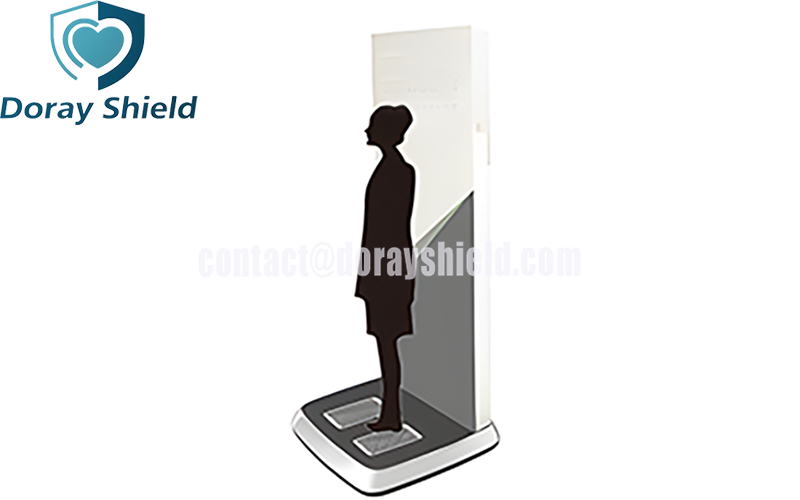
2. Unique Remote Acquisition Control: During image acquisition, there is no need for the operating physician to go to the isolation ward for patient positioning. The patient simply stands in front of the detector, and the operating physician can remotely acquire images. This unique remote acquisition control greatly improves the feasibility of this technology.
3. Image Processing and I-131 Activity Measurement: The acquired information can be reconstructed and processed to provide a basis for subsequent activity measurement. Through prior calibration, the system automatically calculates and analyzes the image signals to obtain the activity of residual I-131 throughout the body, providing a basis for assessing residual I-131 in the patient before discharge.
I-131 therapy for thyroid diseases has been widely adopted in clinical practice, demonstrating significant efficacy, safety, and convenience. It is one of the fastest-growing radionuclide therapy programs in my country. In the diagnosis, treatment, and efficacy evaluation of differentiated thyroid cancer, the I-131 Treatment Dynamic Radiation Detection Instrument is widely used for residual thyroid tissue after thyroid cancer surgery, as well as for treating recurrent and metastatic tissues.
Delivery is prompt!
By 10-year industry experts!
Diverse payment methods available!
Unbeatable cost performance!