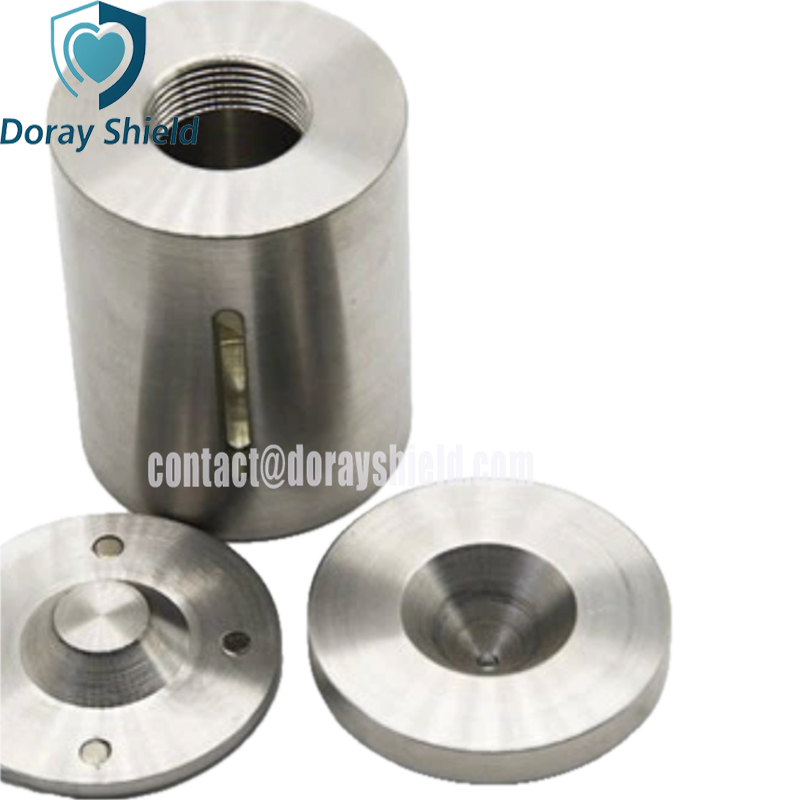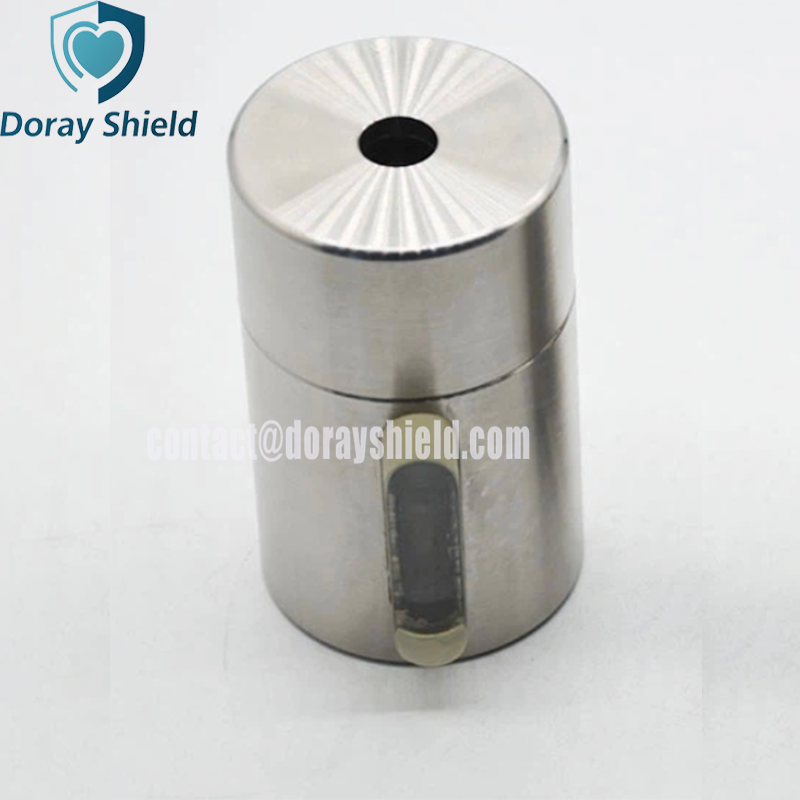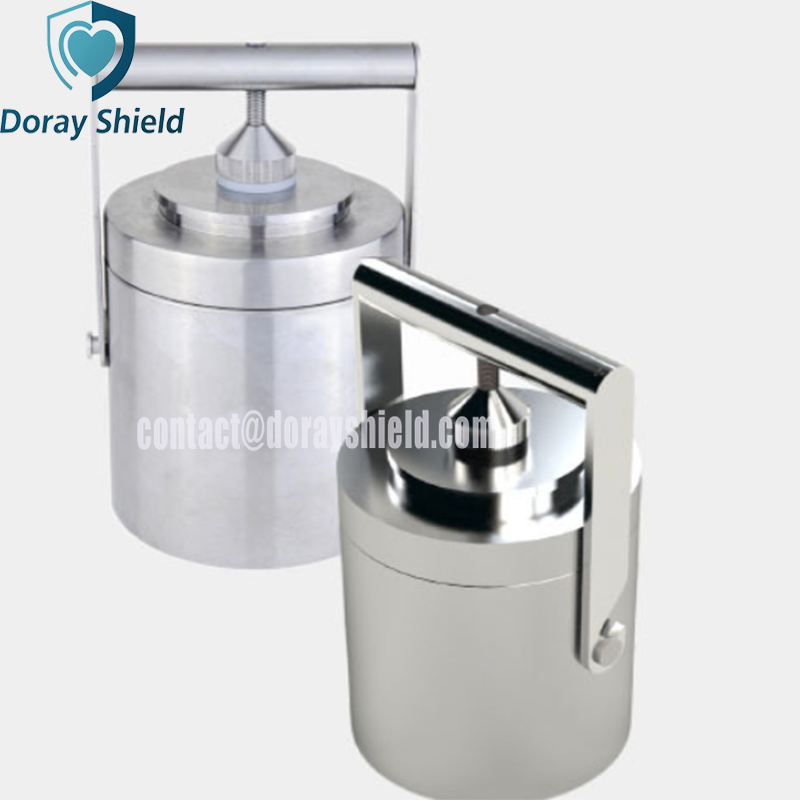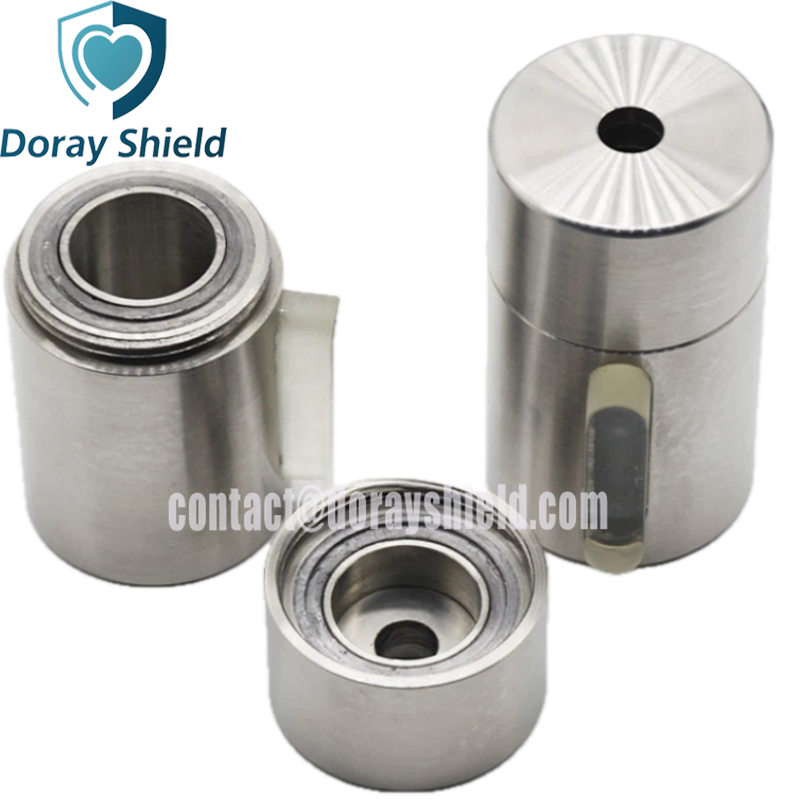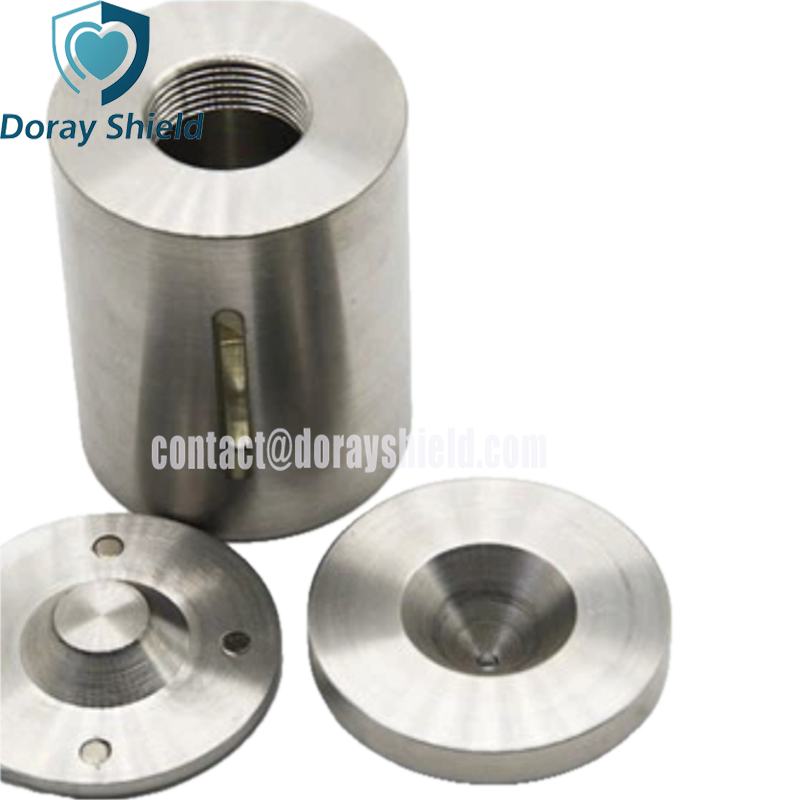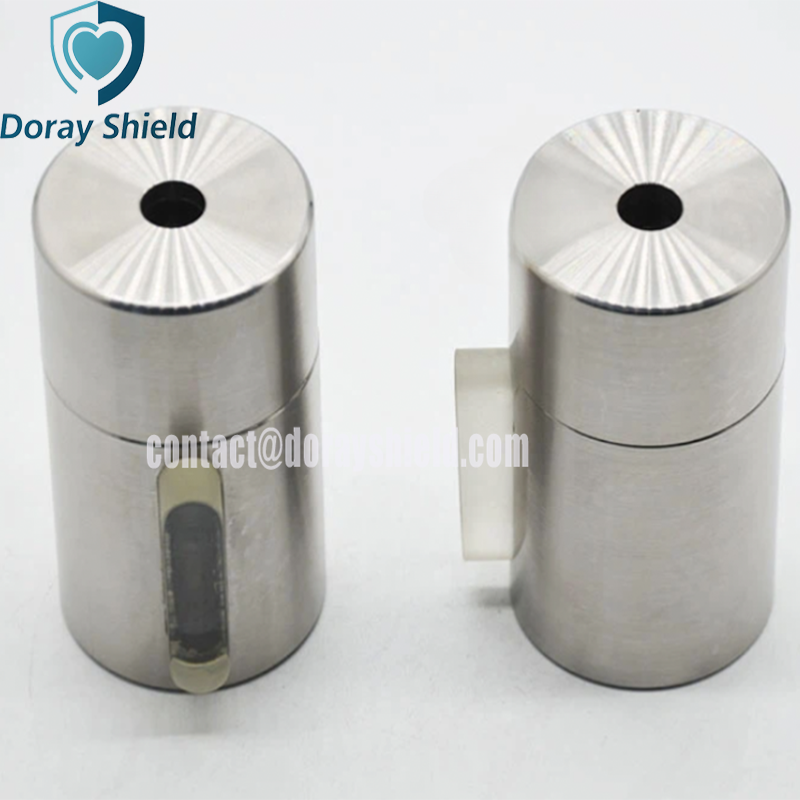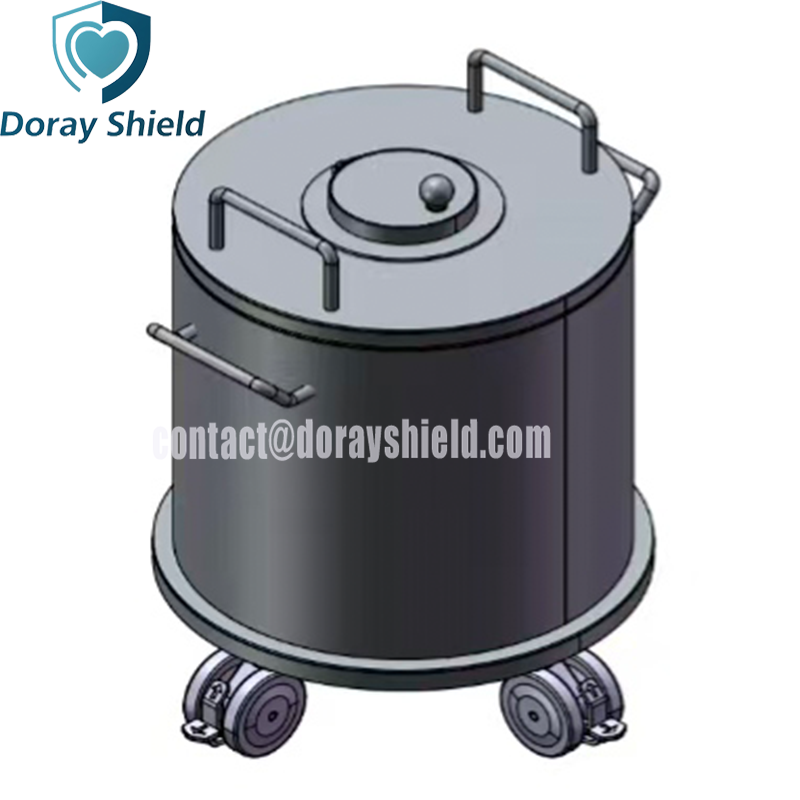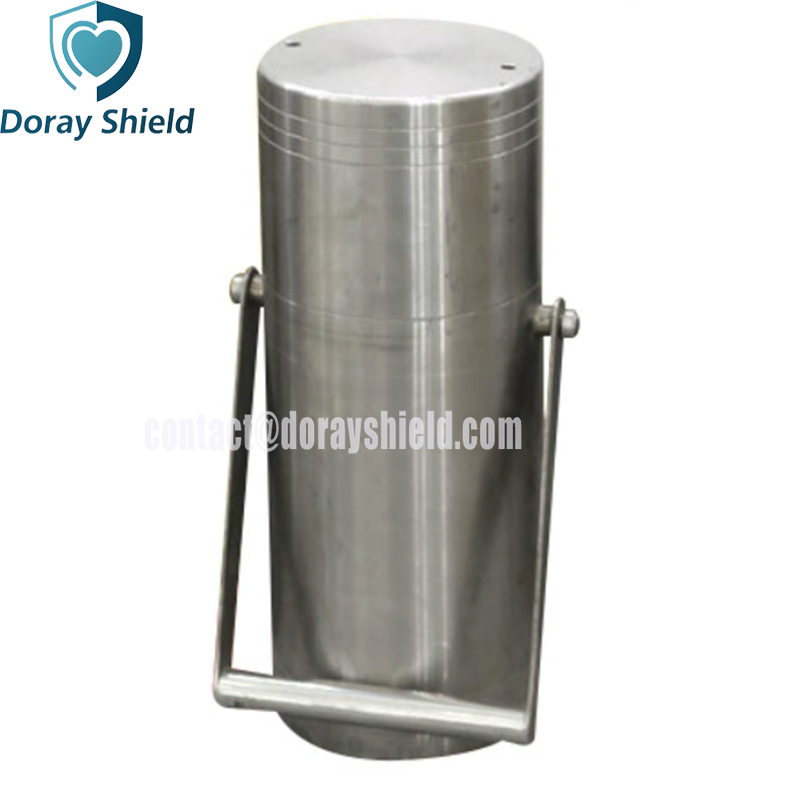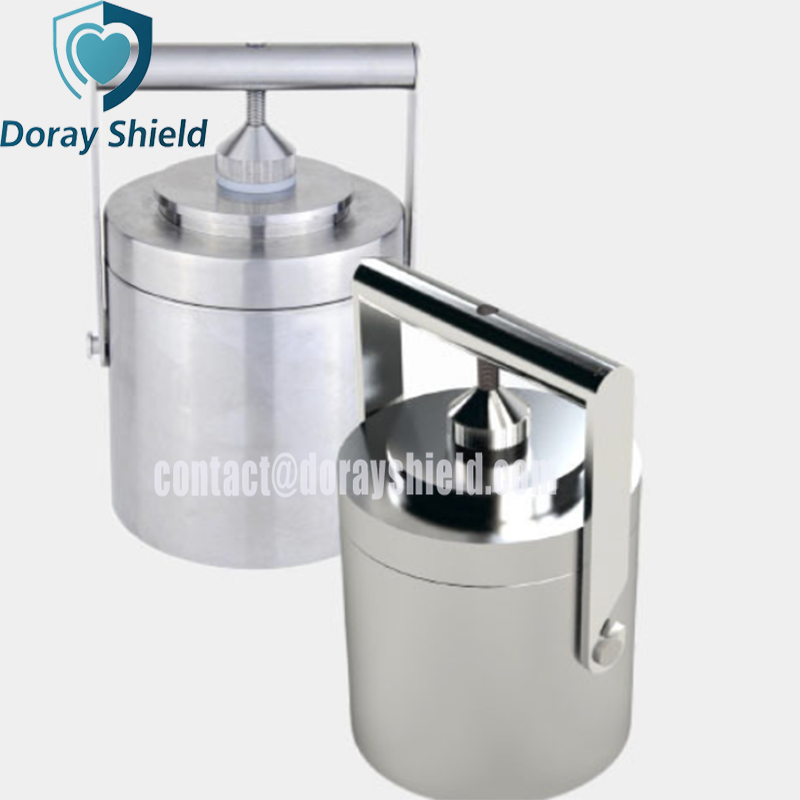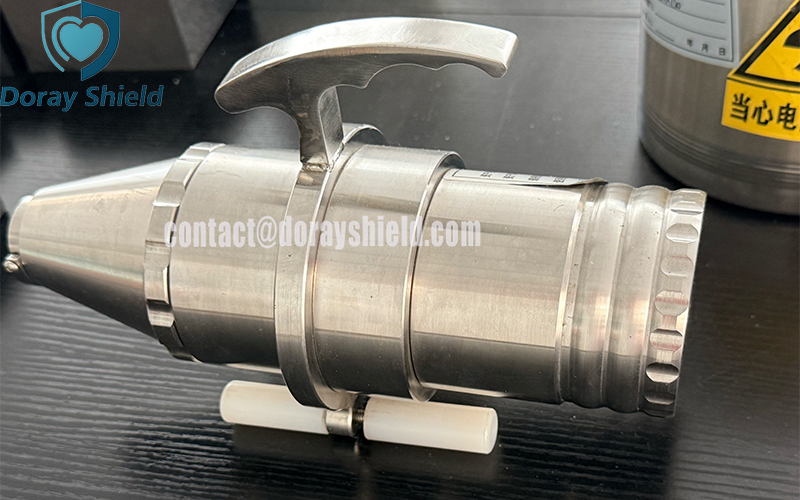
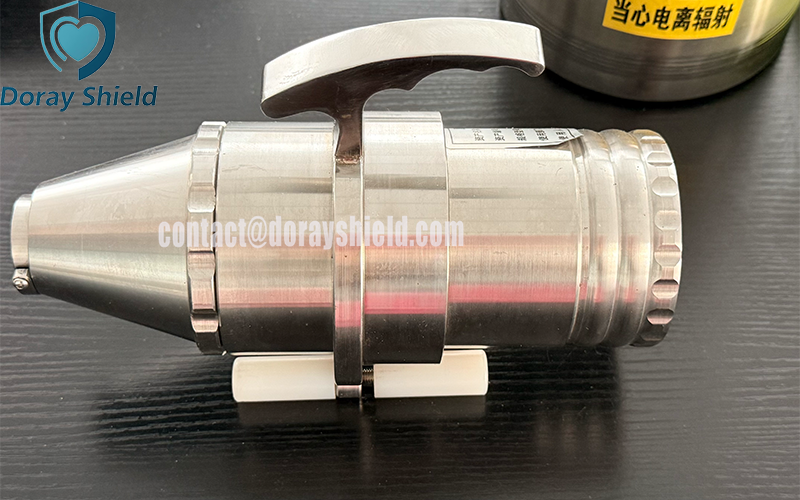
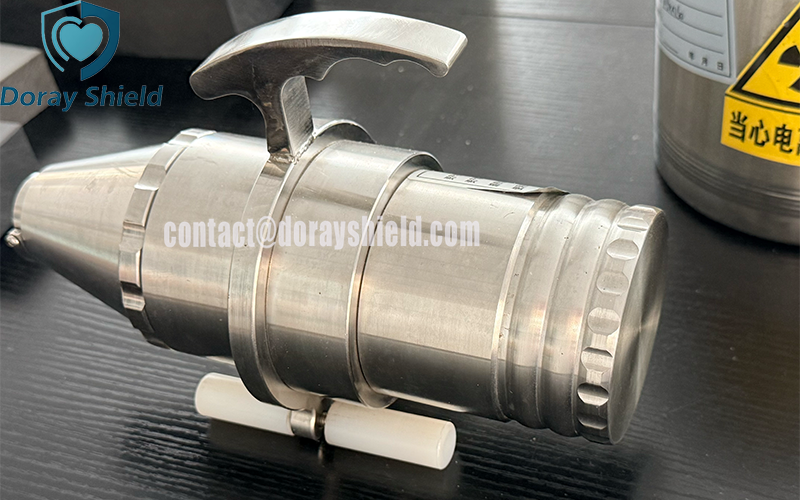
Lead unit dose pigs for nuclear medicine (commonly referred to as syringe shields or single-dose transport containers) are portable shielded vessels designed for the containment, transport, and injection of single doses of radiopharmaceuticals for therapy or diagnosis. Their primary function is to minimise radiation exposure to operators during dispensing, transport, and administration. They are typically cast from high-purity lead (Pb > 99.9%), though some models utilise tungsten-nickel-iron alloy (which offers higher density, resulting in a volume reduction of approximately 40% and a weight reduction of 20% for the same level of shielding). The outer layer consists of 304 stainless steel or engineering plastic, providing impact resistance and preventing lead dust leakage, while the inner layer features seamless welded or cast lead to ensure there are no gaps for radiation leakage.
Injection Shielding: When nurses manually administer radiopharmaceuticals such as F-18 or Tc-99m, the canister encases the syringe barrel—exposing only the needle—thereby protecting the hands from gamma-ray exposure.
Single-Dose Transport: Safely transports pre-dispensed single-dose vials from the pharmacy or preparation area to the injection room, preventing radiation exposure during transit.
Temporary Storage: Provides short-term storage for high-activity single-dose radiopharmaceuticals before injection, serving as an alternative to localised shielding requirements associated with large-scale storage wells.
Material | Lead |
Dimensions | 8.5″ H x 1.94″ Dia |
Shape | Bar |
Color | Yellow, Red, White, Blue |
Delivery Time | 15--20 days |
Standard | ASTM,DIN,GB |
Weight | 1.4-2.8kg |
Certification | ISO 9001 |
Damage Inspection: Lead is a soft material; the casing must be regularly inspected for dents or cracks. Deformation can compromise shielding effectiveness, necessitating immediate removal from service and repair.
Surface Decontamination: The surface must be cleaned with a specialised decontaminant after each use to prevent radioactive cross-contamination; additionally, periodic scans with a dosimeter should be performed to ensure there are no abnormal increases in radiation levels.
Trend Toward Alternatives: Due to the toxicity and weight of lead, new tungsten alloy containers are becoming increasingly popular; although more expensive, they are lighter, more environmentally friendly, and offer superior shielding efficiency.
Delivery is prompt!
By 10-year industry experts!
Diverse payment methods available!
Unbeatable cost performance!