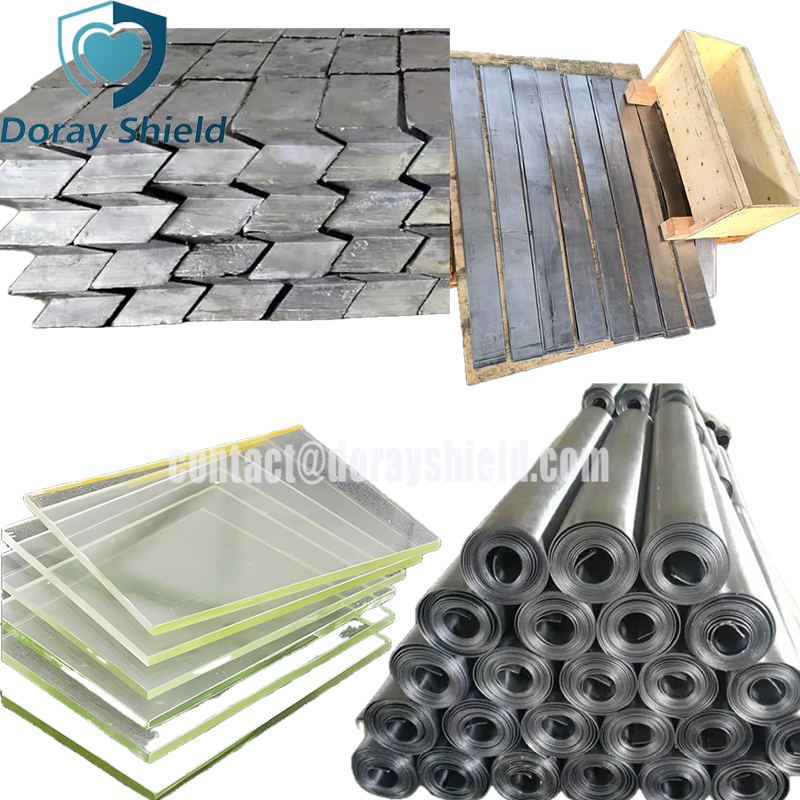
Introduction Of Leading Shielding Materials
Lead, as a high-density, high-atomic-number metal, has an excellent shielding effect against nuclear radiation. Lead, as a shielding material, is mainly used in the field of radiation protection. It has the characteristics of strong radiation absorption, especially for gamma rays and X-rays. When nuclear radiation particles encounter lead shielding materials, they will collide multiple times due to their high density and high atomic number, which greatly weakens their penetration and energy. This characteristic makes lead the preferred material for protecting against nuclear radiation.
Types and applications of lead shielding materials
Lead shielding materials include pure lead plates, lead glass, lead rubber, etc. Pure lead plates are often used in shielding walls and protective doors of nuclear facilities such as nuclear reactors and accelerators due to their high density and stability. Lead glass is widely used in protective windows and observation windows in the fields of nuclear medicine and radiology due to its transparency and certain shielding ability. Lead rubber is often used in the production of personal protective equipment such as protective clothing and gloves, due to its softness and plasticity.
Common application scenarios
Nuclear medicine : Used for radiation protection of medical equipment such as radiotherapy rooms and CT rooms.
Industrial field : Nuclear power plants, scientific research laboratories, and other places that need radiation shielding.
Special engineering : Make 50mm and 100mm thick lead walls for nuclear engineering protection, and interlocking lead bricks can be flexibly assembled to form shielding structures.