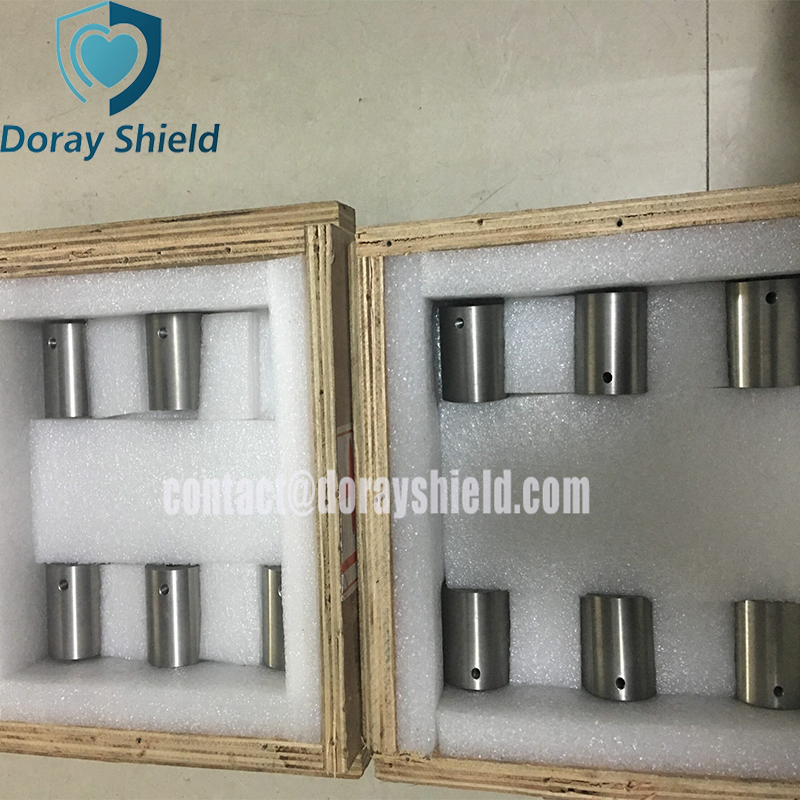
Material Properties And Advantages Of TCN799 Tungsten Alloy Collimators
Producing TCN799 tungsten alloy collimators requires tungsten alloy materials consisting of tungsten base with nickel and iron. The standards like ASTM B777-99 have different grading systems based on tungsten content vs weight and material hardness.
Some of the advantages tungsten alloys have are as follows:
Effective Shielding: Tungsten alloy outperforms lead shielding with less than 1.7 times the thickness<. The stronger the radiation, the greater the advantage.
Safe shielding: Unlike lead, Tungsten alloy is chemically stable and non-toxic with no adverse effects on the body, and is environmentally better.
High resistance: Tungsten is the best metal for high temperatures. with the highest melting point. It also has high stability under various special gas conditions.
Key Points of the TCN799 Tungsten Alloy Collimator Manufacturing Process
The manufacturing of tungsten alloy collimators begins with mixing tungsten metal powder (at least 90%) with other metal powders such as iron and nickel, followed by heat treatment. Subsequently, a sintering process is employed—heating the pressed or loose powder body to a temperature below the melting point of its basic components and maintaining that temperature—to bond the powder particles, significantly increasing the strength and density of the sintered body. The sintering process has a decisive impact on the performance of the final product.