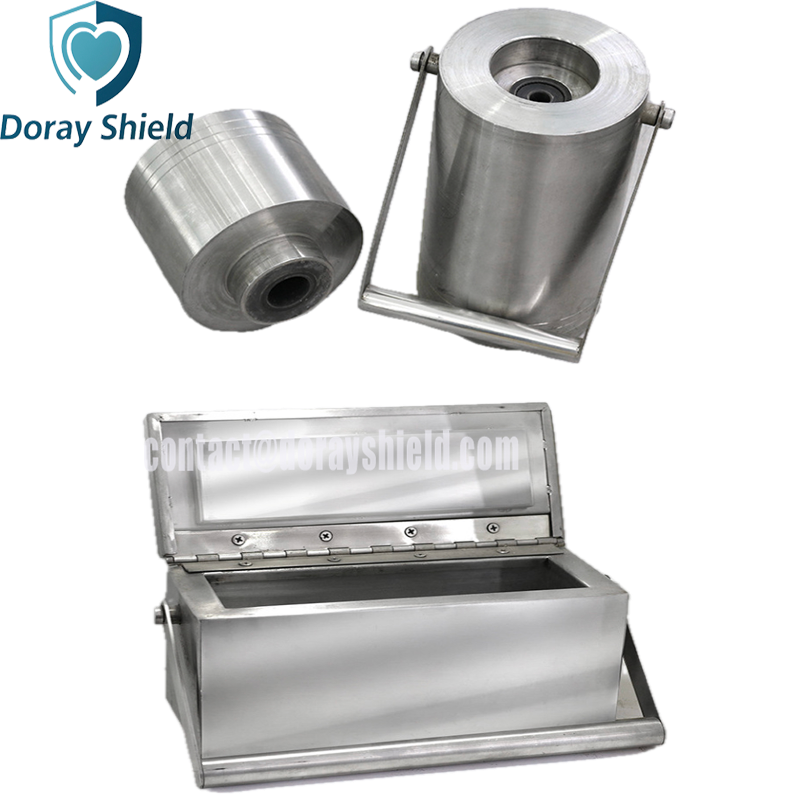
A radiopharmaceutical lead container is a specialized shielded vessel designed for the safe storage, transport, and handling of radiopharmaceuticals (such as Iodine-131). Its primary function is to utilize high-density lead material to effectively attenuate the gamma rays and X-rays emitted by radionuclides, thereby protecting operators, patients, and the environment from unnecessary radiation exposure. Typically constructed from high-purity lead, the container may also feature an outer casing made of stainless steel.
I. Core Design Principles and Material Selection
The shielding effectiveness of a lead container is primarily predicated upon the physical properties of lead. Possessing a high atomic number (Z=82) and high density (11.34 g/cm³), lead is capable of efficiently attenuating ionizing radiation through mechanisms such as the photoelectric effect, Compton scattering, and pair production.
For radionuclides commonly utilized in nuclear medicine—specifically diagnostic X-rays and gamma rays with energies ranging from 50 to 150 keV—lead serves as an economical yet highly effective shielding material, exhibiting stable performance at ambient temperatures. The design objective of a lead container is not to eliminate radiation, but rather to reduce the radiation dose to a level below established safety thresholds.
II. Typical Structures and Classification
Depending on their intended use and the specific radioactive sources they contain, lead containers vary in form and structure. They are commonly found in the following applications:
Medical Radiopharmaceutical Containers: Primarily used in nuclear medicine departments to store diagnostic or therapeutic radiopharmaceuticals, such as Technetium-99m, Fluorine-18, and Iodine-131.
Syringe Shields: Provide shielding for syringes containing liquid radiopharmaceuticals; they typically feature a lead-glass viewing window to facilitate the reading of volume markings.
Vial Shields: Cylindrical containers designed to hold glass vials of liquid radiopharmaceuticals; their interiors often feature securing mechanisms to prevent the vials from shifting or breaking.
Industrial and Transport Containers: Used for industrial non-destructive testing (NDT) or for the long-distance transport of high-activity radioactive sources.
Industrial NDT Source Containers: Typically designed as portable cases or trolley-mounted units, these feature precisely engineered internal source guide tubes and shutter mechanisms that enable remote operation. They are required to pass rigorous fire resistance, water resistance, and impact resistance tests.
Transport and Storage Containers: Used for the transport or long-term storage of high-activity radioactive sources. These containers feature robust, heavy-duty construction and are often equipped with heat dissipation systems, shock absorption mechanisms, and anti-theft devices.
The typical structure of a lead container generally comprises the following components:
Inner Liner: Composed of solid lead or a lead alloy, providing the primary radiation shielding.
Outer Shell: Typically constructed from stainless steel or aluminum alloy, serving to protect the inner liner and provide structural integrity to the container.
Safety Features: These include a "labyrinth" style lid design to prevent radiation leakage through gaps, clear status indicators (e.g., "Open/Closed" markings), and adherence to international standards regarding surface dose rate limits.