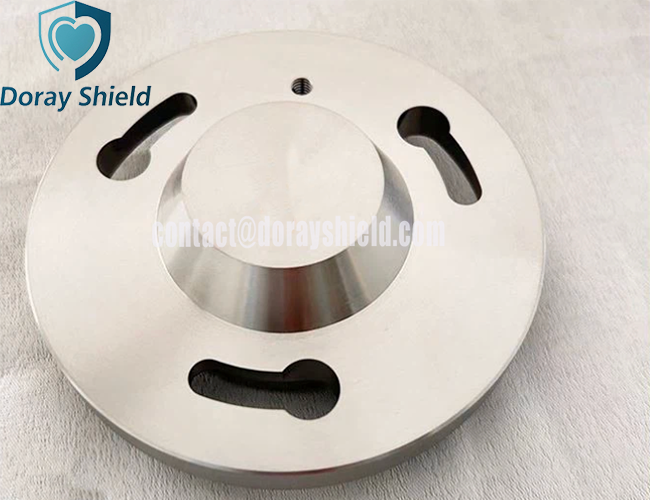
Tungsten alloy shielding is a radioactive material shielding device made with high-density tungsten alloy as its core material. It is an environmentally friendly radiation protection device primarily used in medical radiotherapy and nuclear industry radioactive source storage. Its density reaches 16.5-19.0 g/cm³, achieving highly efficient attenuation of X-rays, gamma rays, and radioactive particles through its high-density physical properties.
Tungsten alloy is an excellent material for shielding X-rays and gamma rays. Tungsten alloy shielding can be used in aiming devices, nuclear shielding, and PET injection shielding. When it is difficult to track disease cells in the body, an alternative to radiotherapy can be used: injection (a type of brachytherapy). This technique involves implanting radioactive seeds into the patient's body. Before and after treatment, the seeds are preserved in tungsten products to protect the patient and doctors from radiation.
Positron emission tomography (PET) is a diagnostic nuclear medicine technique. PET scans are frequently used to detect cancerous tumors, brain diseases, and coronary artery disease. While X-rays expose internal structures, PET can reveal the chemical functions of individual organs. PET involves injecting DNA into the patient through a syringe. When DNA passes through a patient's body, it releases gamma rays, which can be detected by a gamma camera, allowing intracellular chemical activity and internal organs to be visualized. Any abnormal chemical behavior could be a sign of a tumor.